
Commercial electrical systems rarely become unsuitable overnight. More often, problems develop gradually as equipment ages, business operations expand and electrical demand increases.
If lights flicker, breakers trip regularly or your existing installation struggles with new equipment, it may be time to ask a commercial electrician in Leicester to assess the system. An upgrade does not always mean completely rewiring the premises, but ignoring warning signs can increase the risk of disruption and electrical hazards.
Here are some of the issues businesses should take seriously.
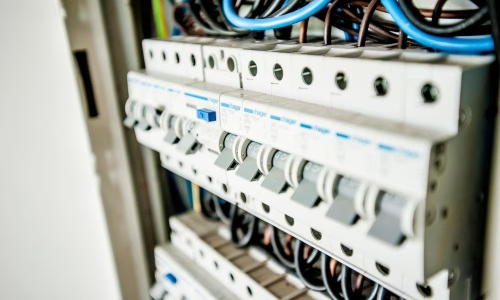
Circuit Breakers Keep Tripping
A circuit breaker that trips occasionally may simply be responding to a temporary fault.
Frequent tripping is different. It could indicate an overloaded circuit, defective equipment, a wiring problem or another fault that requires investigation.
Repeatedly resetting a breaker without identifying the reason is not a suitable long-term solution. HSE guidance requires electrical systems and equipment used at work to be maintained so that they do not give rise to danger.
A competent electrician can establish whether the problem comes from an individual appliance, circuit or wider electrical installation.
Your Business Has Outgrown Its Original Electrical System
Consider how much electrical equipment your workplace used when the building was first fitted out.
You may now have additional computers, machinery, kitchen equipment, air conditioning, servers, electric heating or EV chargers. Each new load changes what is being asked of the installation.
An older system may still operate safely, but it might not have been designed around today’s demand.
When planning new equipment, electrical contractors in Leicester can assess available capacity, distribution equipment and existing circuits before additional loads are connected.
This is particularly important if your business is considering workplace EV charging. Our guide to the Key Benefits of Installing EV Charging for Businesses You Can’t Ignore provides further background on commercial charging.
Sockets, Switches or Distribution Equipment Are Getting Hot
Electrical equipment should not routinely become excessively hot during normal use.
Discolouration around sockets, a burning smell, visible scorching or unusual heat should be investigated promptly. Damaged cables, plugs and electrical fittings are also warning signs.
HSE specifically advises that electrical equipment and installations should be maintained to prevent danger and that damaged equipment should be taken out of use where appropriate.
Do not continue using an obviously damaged outlet simply because it is still supplying power.
You Are Relying Heavily on Extension Leads
Extension leads can be useful for temporary arrangements, but large numbers of them around a commercial property may reveal a more fundamental problem.
Perhaps there are not enough socket outlets where staff actually need them. Equipment may have been added gradually without the fixed electrical installation changing with it.
Daisy-chaining extension leads or continually adapting an inadequate socket layout can create unnecessary risks.
Instead, consider whether the premises need additional properly designed circuits and socket outlets as part of an electrical upgrade.
Lights Flicker or Dim When Equipment Starts
Flickering lights can have several possible causes, ranging from a problem with the light fitting itself to an issue elsewhere within the installation.
Pay particular attention if lights regularly dim when machinery, air conditioning or other high-demand equipment switches on.
That does not automatically prove the electrical system needs replacing, but it is a useful reason to arrange further investigation.
Professional electrical services in Leicester can include testing the affected circuits and checking whether the distribution system remains suitable for the business’s present load.
Your Electrical Installation Has Been Altered Repeatedly
Commercial premises often change over time.
Walls are moved, offices are created, machinery is relocated and new equipment is installed. Multiple alterations carried out over many years can leave an electrical system that is difficult to understand or no longer well suited to how the premises operate.
Missing circuit information, poorly identified distribution boards or undocumented modifications are reasons to have the installation reviewed.
The current UK national standard for electrical installations is BS 7671:2018+A4:2026, covering new installations as well as additions, alterations and periodic inspection of existing systems.
An EICR Identifies Significant Defects
An Electrical Installation Condition Report, or EICR, assesses whether an electrical installation is satisfactory for continued use.
It can identify deterioration, defects and potentially dangerous conditions. The IET explains that periodic inspection and testing is intended to determine whether the installation remains suitable for continued use.
Importantly, an older installation does not automatically require replacement simply because it does not match every aspect of the latest standard.
The condition, risk and specific observations recorded during inspection need to be considered. This helps businesses distinguish between work that is necessary for safety and improvements that may be advisable for other reasons.
You Are Planning Solar, Batteries or EV Charging
Major changes to how your business uses or generates electricity are a good opportunity to review the existing installation.
Adding solar PV, battery storage or EV chargers can change electrical loads and how power moves around the premises.
Before introducing new technology, an electrician may need to assess distribution boards, protective devices, earthing, available capacity and other parts of the installation.
Although written around domestic solar installations, our guide What Electrical Checks Should You Have Before Installing Solar Panels in Leicester? explains several of the electrical considerations involved when adding solar PV.
Does Every Older Commercial Building Need Rewiring?
No.
The age of an electrical system alone does not tell you whether complete rewiring is necessary.
A maintained older installation may remain serviceable, while a newer installation could develop faults or become unsuitable following poor alterations.
The Electricity at Work Regulations 1989 require electrical systems used at work to be maintained, so far as reasonably practicable, to prevent danger. They do not simply say installations must be replaced when they reach a particular age.
This is why inspection and testing are more useful than assumptions based purely on the age of the premises.
When Should You Call a Commercial Electrician?
Arrange professional advice if you notice recurring faults, overheating, damaged equipment, unexplained power interruptions or signs that your electrical system is struggling with current demand.
You should also consider an assessment before adding significant new equipment or changing how your premises uses electricity.
A planned upgrade can be far easier to manage than dealing with electrical problems after they begin affecting normal business operations.
When an Upgrade Becomes a Business Decision
Electrical upgrades are not only about fixing faults. They can also be about making sure the premises are ready for the way the business operates today.
If your system is showing repeated warning signs, struggling with increased demand or due to support new equipment, it is worth having the installation professionally assessed before problems begin affecting day-to-day operations.
East Goscote Electrics Limited can inspect commercial electrical systems, identify areas that may need improvement and recommend work based on the condition and demands of the property.
A professional assessment can help you understand what genuinely needs upgrading, what can remain in place and how to plan the work with minimal disruption to your business.
Posted in Latest News