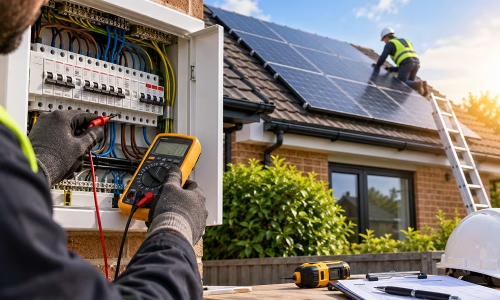

Solar panels may sit on the roof, but a successful installation depends just as much on what is happening inside your home’s electrical system.
Before arranging solar panel installation in Leicester, it is sensible to understand which electrical checks may be needed. These checks help determine whether your existing installation can safely accommodate solar PV and whether any remedial work should be completed first.
Not every property needs an electrical upgrade. However, checking the condition and suitability of the existing system before installation can prevent unexpected problems later.
Start With the Consumer Unit
One of the first things an installer is likely to examine is the consumer unit.
Solar PV introduces another electrical source into the property, so the installer needs to confirm that the existing distribution equipment is suitable for the proposed system and can accommodate the necessary protective devices.
An older consumer unit does not automatically mean it must be replaced.
However, if the equipment is damaged, unsuitable for the proposed connection or cannot provide the protection required by the current installation design, additional electrical work may be recommended.
This is why reputable solar panel installers in Leicester should assess the property rather than simply quote from the number of panels required.
Check the Condition of the Existing Wiring
The age of your home alone does not determine whether the wiring needs replacing.
What matters more is its condition.
The electrical installation should be checked for issues that could affect the safe connection of the solar PV system. This may include signs of deterioration, damaged accessories, previous alterations or other defects relevant to the proposed work.
Current electrical installations in England must comply with applicable Building Regulations requirements. Part P covers electrical safety in dwellings and specifically includes photovoltaic panels connected to domestic electrical installations.
The current IET Wiring Regulations are BS 7671:2018+A4:2026, which provide the technical framework used for electrical installation work, inspection and testing.
Do You Need an EICR Before Solar Panels Are Installed?
Not necessarily.
There is no general rule saying every homeowner must obtain a full Electrical Installation Condition Report simply because they want solar panels.
However, an installer must still establish whether the existing electrical installation is suitable for the work being proposed.
If the installation is older, its condition is uncertain or there are signs of electrical defects, a more detailed inspection may be advisable.
An EICR can identify issues such as potentially dangerous defects or areas requiring further investigation. The IET explains that inspection and testing should be carried out by someone with the appropriate knowledge, experience and competence.
For homeowners comparing electrical services in Leicester, it is therefore worth asking what level of inspection is included before the solar installation begins.
Are Earthing and Bonding Arrangements Suitable?
Earthing and bonding are important safety considerations in any electrical installation.
Before solar PV is connected, the installer should confirm that the existing protective arrangements are suitable for the proposed system.
If deficiencies are found, they may need to be corrected before or as part of the installation.
This does not necessarily mean extensive rewiring. In some properties, relatively limited remedial work may be enough.
Experienced electrical contractors in Leicester should be able to explain what has been identified, why any work is necessary and how it relates to the solar installation rather than simply recommending upgrades without explanation.
Is the Electricity Supply Suitable for Solar Generation?
Solar panels do more than consume electricity. They generate it and operate in parallel with the electricity network.
This means the property’s connection to the local distribution network needs to be considered.
Government guidance states that the local Distribution Network Operator, commonly called the DNO, must be notified when significant energy devices such as solar PV are connected.
Depending on the size and type of system, the installer may be able to notify the DNO after installation under the relevant connection procedure, or prior approval may be required.
For larger generating systems, the G99 connection process may apply. National Grid Electricity Distribution provides specific generation connection procedures for its Midlands network.
The installer should establish which process applies before the system is commissioned.
What About the Inverter and Isolation Equipment?
The inverter is a key part of a solar PV installation because it converts the electricity generated by the panels into electricity that can be used within the property.
Its location, electrical connection and associated isolation arrangements all need to form part of the installation design.
The installer should consider safe access, cable routes, protective equipment and the ability to isolate relevant parts of the system where required.
This is another reason why solar panels in Leicester should be treated as an electrical installation rather than simply roofing equipment.
If you are still researching how solar PV works, Everything You Should Know About Solar Panels provides a useful introduction before you start planning an installation.
Should Future Electrical Demand Be Considered Too?
Yes, particularly if you expect to add other electrical equipment later.
For example, you may be considering an EV charger, battery storage or another significant electrical load in the future.
Telling the installer about these plans can help them assess the electrical system as a whole instead of designing the solar PV installation in isolation.
If a home EV charger is likely to be your next project, How To Choose The Right EV Charger For Your Home can help you understand charging capacity and common charger options.
Planning ahead does not necessarily mean installing everything at once. It simply reduces the risk of choosing equipment or electrical arrangements that may become restrictive later.
Do Planning Rules Affect the Electrical Checks?
Planning permission and electrical safety are separate issues, but both should be considered before installation.
Many domestic solar panel installations can be carried out under permitted development rights, subject to conditions.
However, Leicester City Council warns that additional restrictions can apply to properties in conservation areas. Solar panels facing the street and visible from it may require planning permission in certain conservation areas, particularly where Article 4 Directions apply.
Checking planning status early can prevent electrical design work being completed for a system that later needs to be altered.
What Should You Ask Before Installation?
Before agreeing to a quotation, ask the installer whether they have checked:
- The condition and capacity of the consumer unit
- Existing wiring relevant to the installation
- Earthing and bonding
- The proposed solar circuit and protective devices
- Inverter and isolation arrangements
- DNO connection requirements
- Whether any remedial electrical work is needed
- What testing and certification will be provided afterwards
These questions can give you a clearer picture of what is included in the quotation and whether additional work is genuinely necessary.
Get the Electrics Right Before the Panels Go Up
A solar installation should start with more than a roof survey.
The electrical system needs to be suitable for safely receiving, controlling and using the electricity generated by the panels. In many homes this may involve only routine assessment and installation work, while older or unsuitable systems may need some improvements first.
For anyone considering solar panel installation in Leicester, having the electrics assessed early can make the installation process clearer and reduce the risk of unexpected work once the project has started.
Planning a Solar Installation?
East Goscote Electrics Limited can assess your existing electrical installation alongside your solar requirements and advise whether any improvements are needed before work begins.
Contact East Goscote Electrics Limited to discuss your property and arrange professional guidance on preparing your electrical system for solar PV.
Posted in Latest News