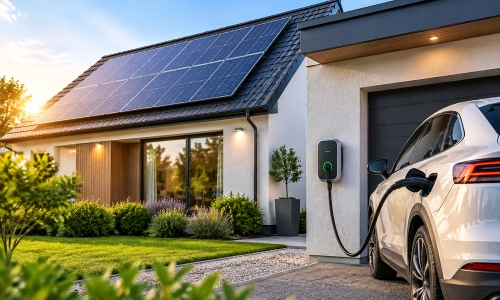


If you are planning to switch to an electric vehicle and are also considering solar panels, you may wonder which installation should come first.
The simple answer is that you do not have to install solar panels before getting a home EV charger. A home charger can operate perfectly well using electricity from the grid.
However, if you already know that you want both technologies, planning them together can make it easier to choose compatible equipment, assess your electrical capacity and decide how you want to use the electricity generated by your solar panels.
Can You Install an EV Charger Without Solar Panels?
Yes.
Most households with an EV home charger in Leicester charge their vehicle using electricity supplied through the grid. Solar panels are not a technical requirement for installing a charger.
A typical domestic charger is connected to a dedicated electrical circuit and must be installed in accordance with the relevant electrical safety requirements. Private domestic chargepoints sold in Great Britain are also required to meet the Electric Vehicles (Smart Charge Points) Regulations 2021, which include smart charging functionality.
If you are still comparing charging options, How To Choose The Right EV Charger For Your Home is a useful guide to charger types, speeds and practical features.
Why Consider Solar Before an EV Charger?
The main reason is not that solar is essential. It is that knowing your future plans can influence which charger and electrical setup you choose.
A suitable solar-compatible charger can monitor electricity being generated by your panels and use available surplus generation to help charge your vehicle.
That can reduce the amount of grid electricity you use for charging, particularly when your vehicle is at home during daylight hours.
For homeowners considering solar panel installation in Leicester, it is therefore worth discussing EV charging plans with the installer before selecting an inverter, monitoring system or charger.
Will Solar Panels Charge an Electric Car for Free?
Not necessarily.
Solar panels generate electricity during daylight hours, but output changes depending on weather, season, roof orientation, shading and the size of the system.
Your EV may also need considerably more electricity than your panels are producing at a particular moment. If this happens, a compatible system may supplement the solar generation with electricity from the grid.
This means solar-assisted EV charging can reduce grid consumption, but it should not be viewed as a guarantee of completely free vehicle charging.
Anyone researching solar panels in Leicester should consider their household electricity use alongside their expected driving mileage rather than judging the system only by the number of panels installed.
For a broader explanation of PV generation, see Everything You Should Know About Solar Panels.
What If You Install the EV Charger First?
That is also perfectly reasonable.
If you need a charger now but are not ready to invest in solar, tell your installer that solar PV may be added later.
Choosing a charger with suitable solar integration can make future expansion simpler. Otherwise, you may later discover that your existing charger cannot make full use of surplus solar generation without additional equipment or changes.
This is why experienced EV charger installers in Leicester should ask about both your current requirements and future home-energy plans.
The charger may be the first installation, but it does not have to be planned in isolation.
Should You Add Battery Storage as Well?
Battery storage introduces another option.
Without a battery, surplus solar electricity must either be used at the time it is generated or exported to the grid.
A home battery can store some of that excess electricity for later use. However, whether it makes sense to charge a battery first and then use that stored energy for an EV depends on factors such as battery capacity, household demand, electricity tariffs and your charging routine.
If your car is normally away from home during the day, battery storage may help you use more of your own solar generation later. But this needs to be assessed as part of the overall system rather than assuming a battery will always produce the greatest financial benefit.
Do Solar Panels and EV Chargers Need to Be Registered?
Both technologies can affect the electricity network.
Government guidance states that homeowners or installers must notify the relevant Distribution Network Operator when significant energy devices are connected, including solar PV, EV chargepoints and battery storage. Depending on the equipment and connection, notification may take place before or after installation.
National Grid Electricity Distribution operates across the Midlands and provides separate application or notification processes for domestic EV chargers and small-scale generation such as solar PV.
Your installer should determine the correct process for your property and equipment.
Do You Need Planning Permission for Solar Panels in Leicester?
Many domestic rooftop solar installations can fall within permitted development rights, meaning a full planning application may not be required if the relevant conditions are met.
However, there are exceptions.
Leicester City Council advises that additional restrictions can apply in conservation areas and where Article 4 Directions remove normal permitted development rights. For example, permission may be required for certain panels facing a street or where installation affects the appearance of a protected property.
Anyone arranging solar panel installation in Leicester should therefore check the status of their property rather than assuming every installation is automatically permitted.
Is It Better to Install Both at the Same Time?
There is no single correct order.
Installing solar first may make sense if your priority is reducing household electricity consumption before buying an EV.
Installing the charger first may be better if you already own an electric car and need reliable home charging immediately.
Installing both together can be useful when you want the systems designed as one connected setup. An installer can assess the household load, solar generation, charger requirements and possible battery storage at the same time.
This approach may also reduce the chance of choosing equipment that later limits solar integration.
What Should You Discuss With an Installer?
Before deciding, give the installer a clear picture of how you expect to use the system.
Useful points to discuss include:
- Your current and future EV
- Expected annual mileage
- When the vehicle is normally parked at home
- Existing electricity consumption
- Roof suitability for solar
- Whether battery storage is being considered
- Charger compatibility with solar generation
- Existing consumer unit and electrical capacity
People arranging either EV charger installation or working with solar panel installers in Leicester will get more useful advice when both present and future requirements are considered.
So, Which Should Come First?
You do not need solar panels before installing a home EV charger.
If an EV charger is your immediate priority, it can be installed independently and solar can be added later. If you already intend to install both, however, planning them together can help you choose compatible technology and make better use of your own renewable electricity.
The right order depends on your budget, driving habits, roof suitability, electrical system and how quickly you need home charging.
Planning Solar Panels and Home EV Charging?
East Goscote Electrics Limited can assess your property and help you understand how solar PV and home EV charging could work together.
Whether you want to install one system now or plan both as part of a longer-term home-energy setup, contact East Goscote Electrics Limited to discuss your requirements and suitable installation options.
Posted in Latest News